Category | Quality Management
Last Updated On 21/02/2026
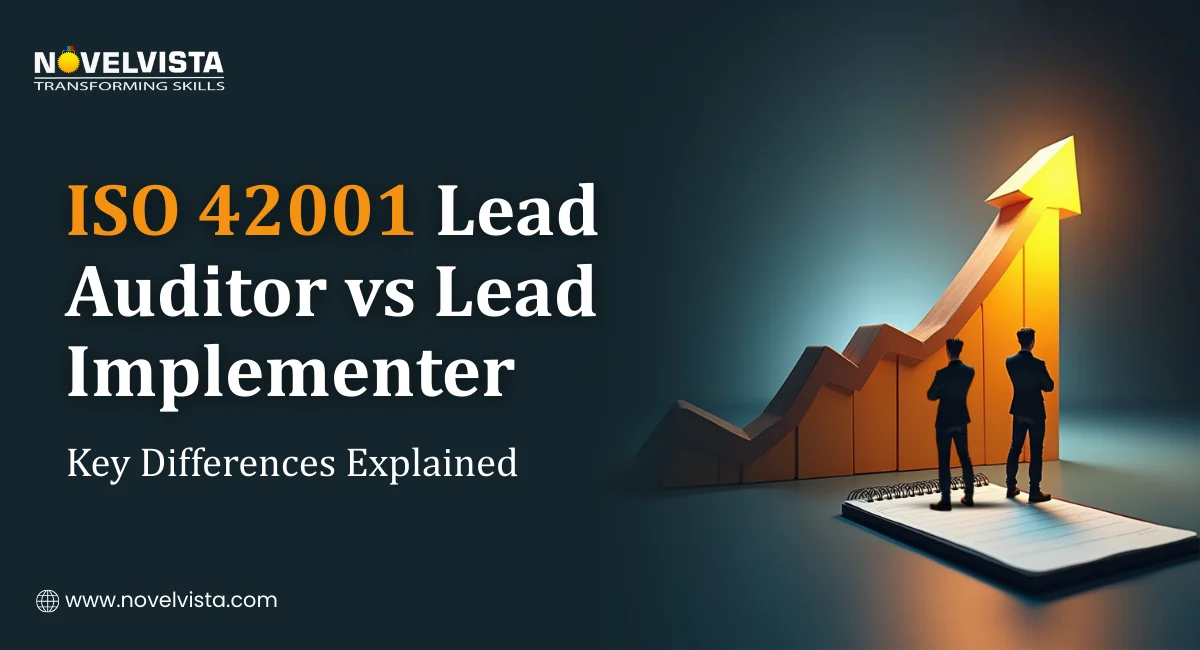
The most common mistake professionals make with ISO 42001 is not misunderstanding the standard, it’s choosing the wrong role. Many people preparing for AI governance careers are unsure whether they should build systems or evaluate them. That confusion shows up clearly when deciding between ISO 42001 Lead Auditor vs Lead Implementer, especially for those already working in risk, compliance, or technology.
In ISO 42001 training and advisory sessions, we consistently see professionals regret their initial certification choice, not because the course was difficult, but because the role didn’t match how they actually work day to day.
This guide cuts through that confusion and explains the real-world ISO 42001 Lead Auditor vs Lead Implementer difference so you can choose with confidence.
Area |
Lead Implementer |
Lead Auditor |
Core purpose |
Build and operate AI governance |
Independently assess AI governance |
Daily work |
Design, implement, improve AIMS |
Audit, verify, report |
Mindset |
Ownership and execution |
Independence and assurance |
Output |
Certification-ready AI system |
Audit conclusions and findings |
Best fit |
Builders and program leaders |
Auditors and compliance professionals |
In real AI governance programs, organizations struggle most when implementers and auditors blur responsibilities. Clear role boundaries consistently lead to smoother audits and faster AIMS maturity.
There are two clear paths:
The difference between iso 42001 lead auditor vs lead implementer is not about seniority. It’s about responsibility and independence. Understanding this early helps avoid frustration later.
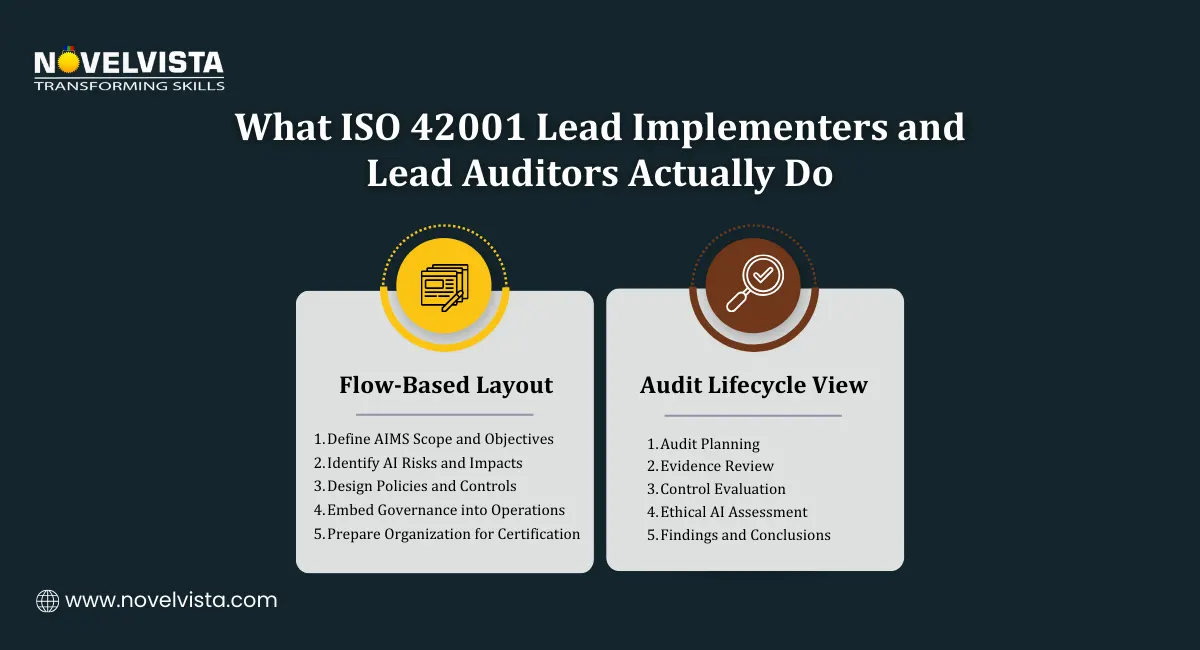
The Lead Implementer role is built for professionals who want to own AI governance inside an organization or for clients.
This role suits people who enjoy building systems and improving how organizations work. You are deeply involved in decisions, trade-offs, and daily governance operations.
If you like hands-on leadership and system ownership, the ISO 42001 Lead Auditor vs Lead Implementer choice often points toward Lead Implementer.
To understand what it takes to get certified, read our detailed guide on ISO 42001 Certification Requirements.
The Lead Auditor role is about independent evaluation, not system ownership. This distinction is central to the difference between iso 42001 lead auditor vs lead implementer.
Lead Auditors must remain objective. They do not design or operate the system they audit. Their value lies in judgment, evidence analysis, and assurance.
Audit credibility under ISO 42001 depends on independence, evidence evaluation, and professional judgment, not operational involvement in the AIMS being assessed. For those who prefer analysis, structure, and governance oversight, ISO 42001 Lead Auditor vs Lead Implementer usually favors the Lead Auditor path.
Compare Lead Auditor and Lead Implementer roles, required skills, and career paths. Choose the direction that fits your strengths and long-term AI governance goals.
Here’s a clean side-by-side view to make the ISO 42001 Lead Auditor vs Lead Implementer decision easier:
Aspect |
ISO 42001 Lead Implementer |
ISO 42001 Lead Auditor |
Primary goal |
Build and maintain AIMS |
Verify and assess AIMS |
Core focus |
AI risks, controls, governance |
Compliance and evidence |
Responsibilities |
Design, policy creation, operations |
Audit planning and reporting |
Skill emphasis |
Governance knowledge, leadership |
Audit techniques, analysis |
Best suited for |
Managers, AI program leads |
Auditors, assurance roles |
Training path |
5-day Lead Implementer course |
5-day Lead Auditor course |
Outcome |
Certification-ready system |
Audit report and conclusions |
This table captures the practical difference between iso 42001 lead auditor vs lead implementer without theory or marketing language.
Now that the structure is clear, the real question becomes personal: where do you see yourself working every day?
The ISO 42001 Lead Auditor vs Lead Implementer decision depends on how you prefer to contribute. The clearest indicator of fit is daily behavior preference: building controls and processes versus challenging them through evidence and questioning.
This path is strong for professionals who want direct involvement in building responsible AI systems from scratch.
The difference between iso 42001 lead auditor vs lead implementer becomes clearer when you look at daily work. Implementers operate systems. Auditors examine them.
Both certifications usually require a structured 5-day accredited course followed by an examination. The learning depth is similar, but the angle is different.
A common strategy many professionals follow:
This dual-path approach works especially well for professionals in cybersecurity, enterprise risk, AI governance, and regulatory compliance.
Understanding the ISO 42001 Lead Auditor vs Lead Implementer pathway early allows you to design your certification strategy rather than choosing randomly.
If you’re planning your certification path, explore our step-by-step guide on How to Get ISO 42001 Lead Auditor Certification in 2026.
AI governance is no longer optional. Regulatory pressure and ethical AI expectations are increasing globally. That demand drives strong career opportunities for both roles.
These professionals are often embedded within organizations or consulting firms helping clients operationalize AI governance.
Because organizations must demonstrate responsible AI practices, auditors with ISO 42001 knowledge are expected to remain in high demand.
Again, the difference between iso 42001 lead auditor vs lead implementer is not about prestige. It’s about function, builder versus evaluator.
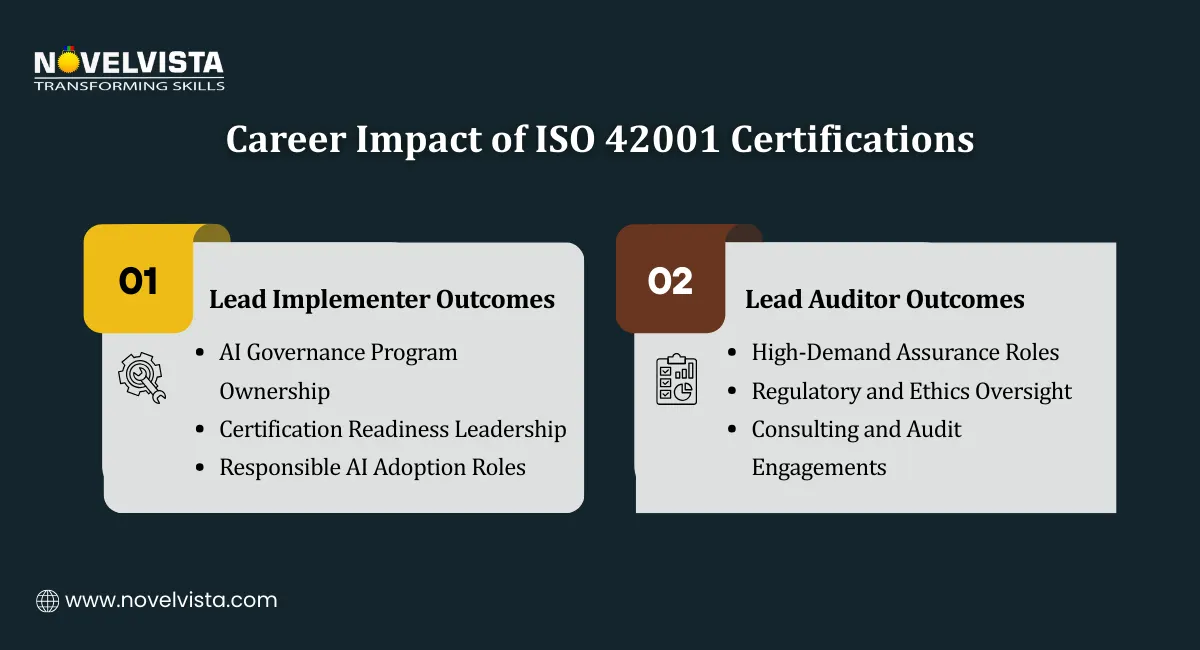
The choice between ISO 42001 Lead Auditor vs Lead Implementer depends on how you want to shape your professional role.
If you enjoy building systems, defining governance structures, and leading operational AI programs, Lead Implementer is likely the right path.
If you prefer evaluating systems, reviewing evidence, and ensuring compliance and ethical alignment, Lead Auditor is the better fit.
Professionals who choose their ISO 42001 role based on working style rather than job title report higher confidence, faster career alignment, and fewer role conflicts.
Both roles are valuable. The key is aligning the certification with your natural strengths and long-term goals.
If you’re ready to move into AI governance assurance, NovelVista’s ISO 42001 Lead Auditor Certification Training Course and ISO 42001 Lead Implementer Certification offers structured learning, practical audit scenarios, and exam-aligned preparation. The program helps professionals understand ISO/IEC 42001:2023 deeply, build audit confidence, and apply governance principles effectively in real environments. It’s designed for those who want to step into responsible AI oversight with clarity and credibility.
Author Details

Course Related To This blog
ISO 42001 Lead Auditor
Confused About Certification?
Get Free Consultation Call
Stay ahead of the curve by tapping into the latest emerging trends and transforming your subscription into a powerful resource. Maximize every feature, unlock exclusive benefits, and ensure you're always one step ahead in your journey to success.